Part C · triggers
When a roof needs a permit, and when it does not
Four triggers, each with a trap inside it. The rules below are the St. Louis County baseline, which is where this metro starts. Kirkwood administers its own code, so the city counter is the authority on your address.
Trigger one: the slope
Under the county baseline, tearing off asphalt shingles and replacing them with the same class of asphalt shingles does not require a permit when the slope is 4:12 or steeper. Below 4:12, it does. Four inches of rise over twelve inches of run is the line, and it is not an arbitrary one. Below that pitch, water stops running off a shingle roof quickly enough for a shingle roof to work, and the assembly has to change to something designed for slow drainage.
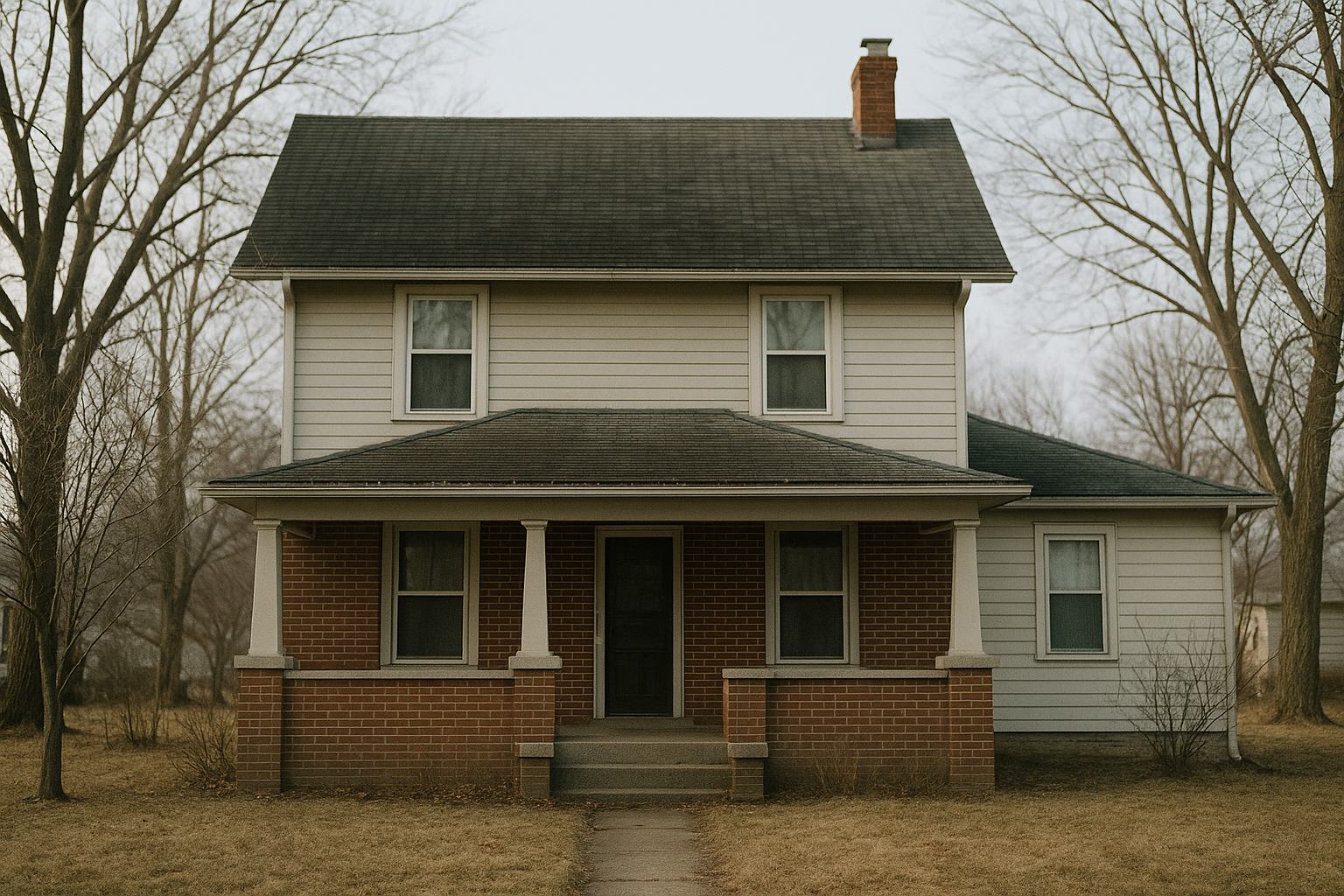
The trap. Houses do not have one slope. An older Kirkwood house very often has a steep main roof and a shallow porch, a shallow rear addition, or a shallow dormer cheek. The main roof can be exempt while the porch is not. If a contractor quotes the whole house as one exempt job without ever measuring the low slope sections, that is not a saving, it is an error that will surface at the worst time.
Ask for the pitch on paper. A proposal should state the pitch of each roof section it covers. It takes a competent estimator thirty seconds and it settles this question permanently.
Trigger two: the decking
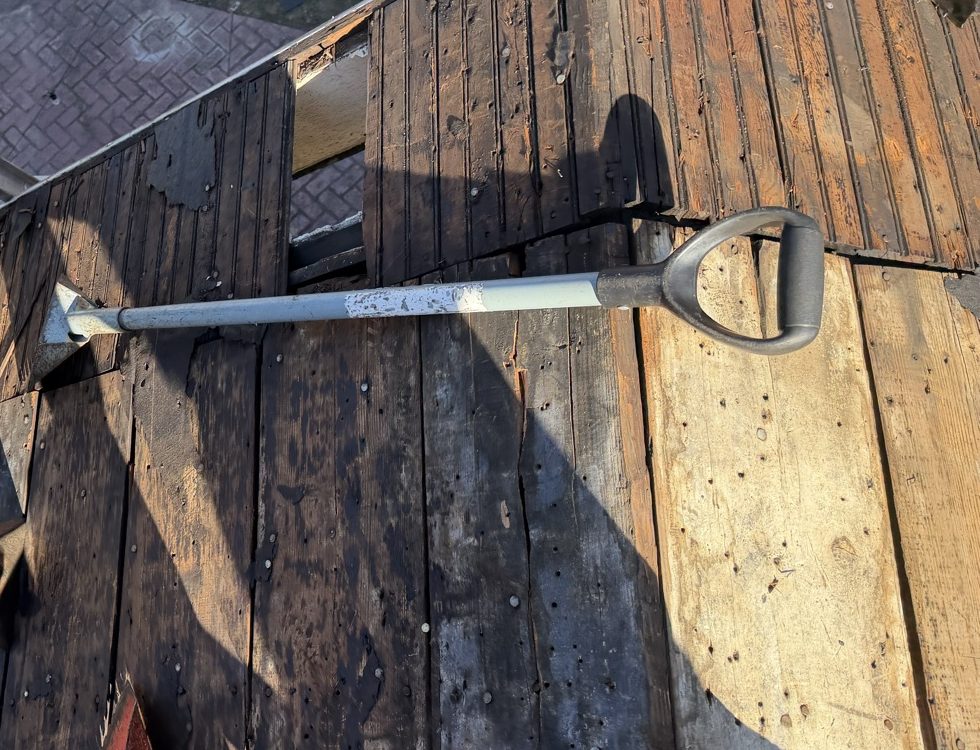
Replace more than a quarter of the roof decking and the county wants a permit, because at that point the job has stopped being a surface replacement and started being structural work. Twenty five percent is the threshold.
The trap. Nobody knows how much decking is bad until the shingles are off. On a house with plywood or oriented strand board decking, the answer is usually "very little" and the threshold is theoretical. On an older Kirkwood house with original plank decking, the answer can be genuinely large: boards split around a century of nail holes, rot under an old chimney flashing, a section that has been quietly wet since a storm nobody remembers.
This is why the price per sheet of replacement decking belongs in the contract, stated as a number, before anyone climbs a ladder. A contractor who leaves it blank has reserved the right to name a price on the day your roof is open to the sky, which is the worst possible moment for a negotiation.
Trigger three: the material changes
If the new roof is not the same kind of roof as the old one, expect the counter to want a look. Asphalt to standing seam metal, metal back to asphalt, anything that changes the weight on the structure or the way the assembly sheds water.
The trap. "Same material" is doing more work in that sentence than people assume. Going from three tab shingles to laminated architectural shingles is still asphalt and is the ordinary modern replacement, but adding a second layer over an existing roof, or changing a low slope porch from rolled roofing to a membrane, is a different question. Ask rather than assume.
Trigger four: the address
This is the trigger the other roofing sites in this market do not list, and in Kirkwood it is the one that overrides the rest. The three rules above are the county baseline. Kirkwood runs its own building division and administers its own code, so the city is the authority inside the city limits. The county exemptions are the right starting point for a conversation and the wrong thing to rely on as a conclusion.
Call the City of Kirkwood building division at Kirkwood City Hall, give them your address and the scope of work, and get the answer for your house rather than for the metro average. It is one phone call and it removes the only genuinely expensive unknown in a roof replacement.
The permit is the cheapest part of a roof and the only part that produces a third party who has no financial interest in the outcome.
What a permit is actually worth to you
- An inspection. Somebody who does not work for the contractor looks at the work. On a trade with no state licensing, that is rare and valuable.
- A record. When you sell the house, permitted work has a paper trail. Unpermitted structural work is a line item a buyer's agent will find.
- A defined scope. The application forces the work to be described. Vague scopes are where disputes live.
- Leverage. A contractor who knows an inspector is coming builds to a standard that survives an inspector.
The counter argument is always speed and fee. Both are real and both are small relative to the cost of a roof done twice.
Nothing here is legal advice or a substitute for the city counter. Permit thresholds and adopted code editions change. If a contractor tells you a permit is not needed, ask them to say it in writing on the proposal, and then confirm it yourself with the city.
Ask Keys to look at it
Leave a name, a number and a sentence about what the roof is doing. Keys calls back, comes out, gets on the roof or puts a camera on it, and gives you a written scope with photographs and measurements. There is no charge for that and no obligation attached to it.
If the roof is open to weather right now, do not use this form. Call (314) 220-2333 and say the word emergency.
- Trades
- Roofing, gutters, downspouts
- Shingles
- Atlas and Malarkey
- Not offered
- Siding, windows, commercial
- Status
- Licensed and insured
Keys Roofing does not represent, negotiate or advertise to negotiate on any homeowner insurance claim, because RSMo 407.725 forbids a roofing contractor from doing so. Keys documents the roof and attends on site as the contractor. The claim stays yours.